How to Journal Regularly? Ideas, Tips, Inspiration
Want to keep a journal but don't know where to start, or how to stick with it for more than a few days? Here's how to pick a notebook, what to write with, where to find topics – and why even a single sentence can grow enormously valuable over time.
Journaling holds a very tempting promise: that you can hold onto a piece of the day before it dissolves into memory along with the shopping list, the missed call, and that one brilliant thought you had in the shower.
How to start journaling
The most important thing is adjusting your environment and minimizing friction. What is friction? Those small, sneaky excuses that do everything in their power to make life "easier" for you – while actually making it harder. For example:
- I don't have anything smart to say today, I'll wait for a more literary mood
- first I'll learn calligraphy, because my thoughts deserve a better font
- let me check Instagram to see how other people journal
- wait, what phase is the moon in today, anyway?
- I'll start on Monday. Or the start of the month. Actually, starting with the new year would be more symbolic.
The perfect condition for starting a journal does exist – but don't let yourself believe you have to wait for it :)
What to write about when you don't know what to write about
The simplest approach: good old stream of consciousness. Empty out everything that comes to mind, with no order, no structure, no filter. Start in the middle. Note that you're drinking coffee from a different mug today. Write a review of the last book you read. Admit that today you don't feel like doing anything.
Journal Prompt Cards can help you write that first line — a set of 52 cards with questions, tasks, and prompts to use while journaling.
Another nice option: the small (note)book created by Frank Bodin – Is it Love?, where every page has a statement or question that invites creative self-reflection.

Journaling has many faces
Your journal doesn't have to be boring – but it absolutely can be. That's the whole point: it's yours. There's no single correct way to keep one. Before you find your way, feel free to test a few approaches. Some inspiration below:
- Classic diary: date, entry, done.
- Writing fictional letters to fictional people: for some reason, this is incredibly exciting!
- Instead of full sentences, notes in list form: things to handle, things to remember, emotions felt, single words summarizing the highlights of the day – anything that can be turned into bullet points.
- Recording your day in the third person: the reversed perspective and distance can make it easier to talk about things that are hard to say directly.
- Good old scrapbooking: combining text with paper trinkets – stickers, photos, clippings…
Look for your dream notebook
It has to be a notebook you actually want to return to. Full stop – no compromises here. Take a walk through your favorite stationery shops and enjoy the sensory pleasure of the search! Check which notebook feels right in your hand if you want to carry it with you everywhere, or which one lies flat the way you like. Finding your favorite notebook is one of the most enjoyable stationery adventures – it would be a shame to skip this step.
What's the most comfortable thing to write your journal with?
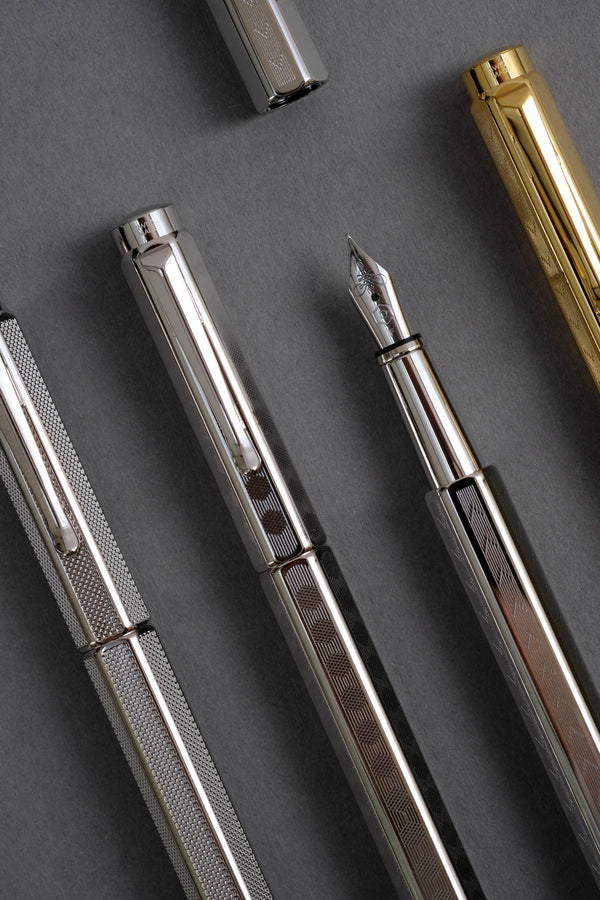
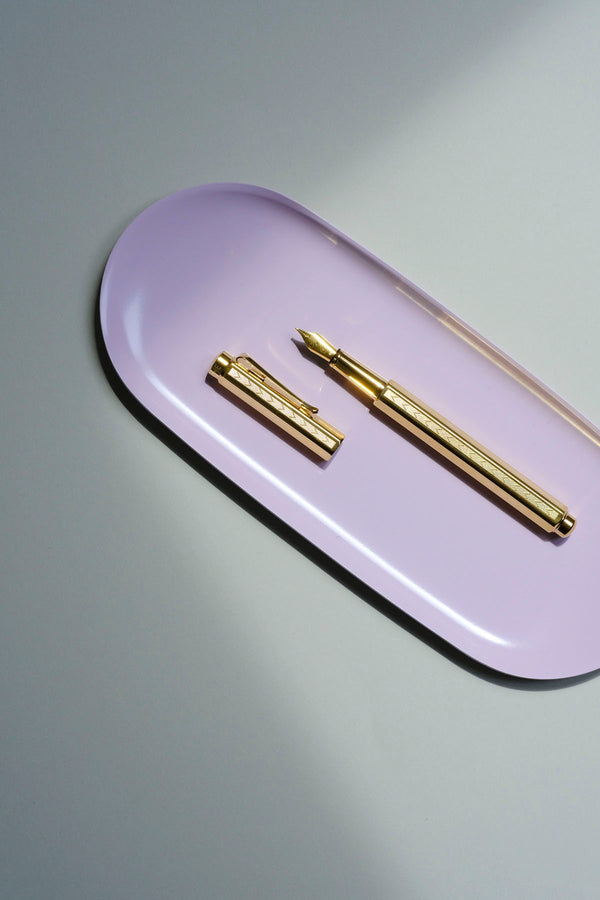
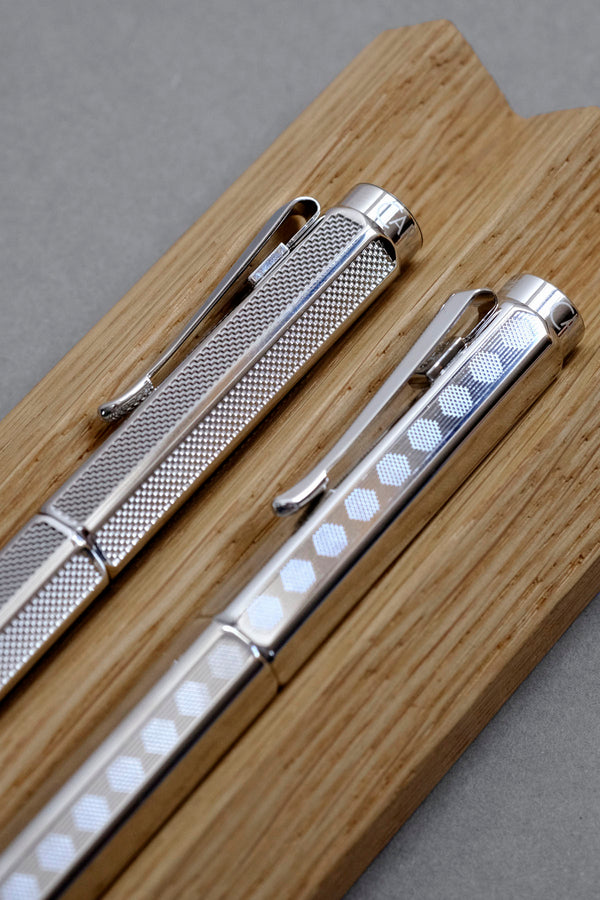
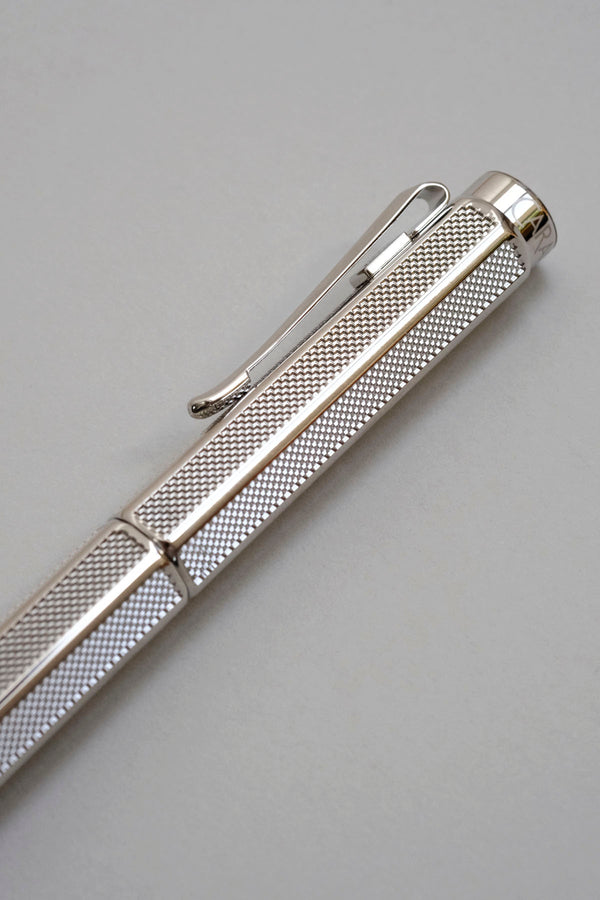
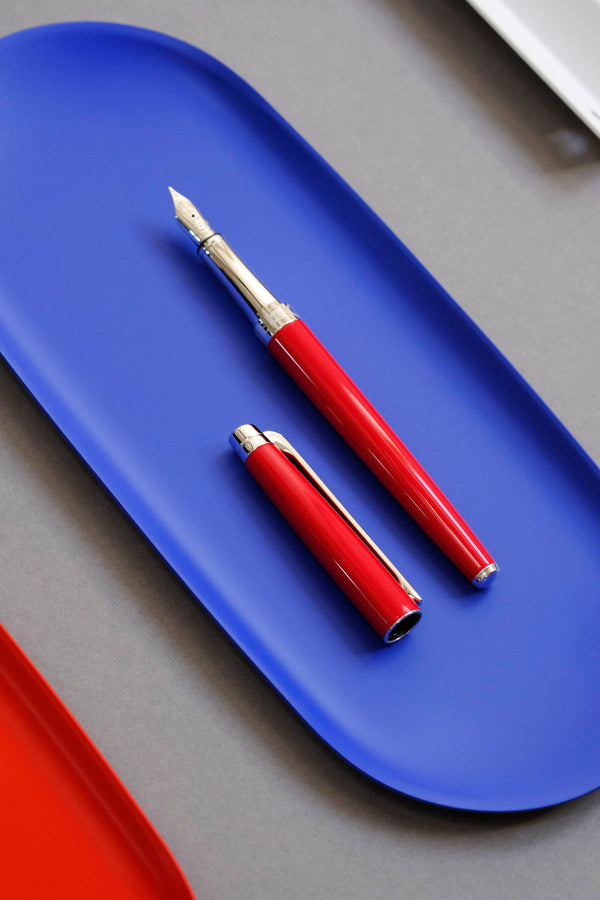
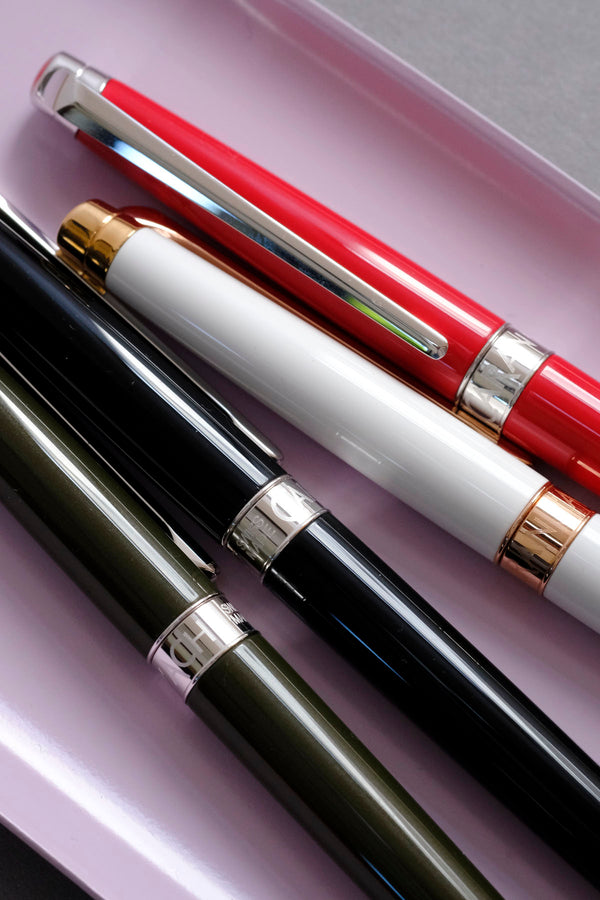
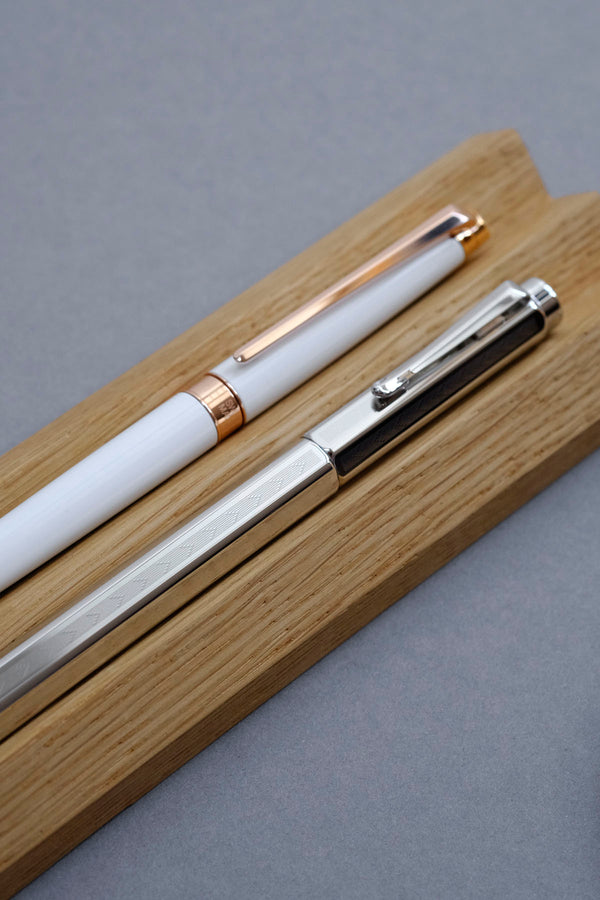
You won't come back to your journal if it means digging out some rickety pen with a skipping cartridge from the bottom of the Drawer of Shame. Get yourself a tool you love holding. One that's eager to meet the paper, wants to taste it, so to speak, and leave its mark – even if that mark ends up being a shopping list scribbled in tiny letters in the margin.
A quick cheat sheet, in case you're not sure what to pick:
- a fountain pen, if thinking about journaling switches on a little romantic streak in you: a daily ritual, a moment that lets you drift off calmly
- a rollerball pen, if you have big, sweeping handwriting and want a soft line, because your hand likes to outrun your thoughts
- a regular pen, if your letters are tightly packed and you prefer a thinner line
- a pencil, if you can't stand crossing out mistakes, and you find the sound of graphite gliding over paper a pleasure all its own
Plot twist: you can also choose a planner (no one's checking)
One of the main reasons a journal dies after a few days is that the bar gets set too high at the start. On day one, page after page, you empty out every backlog of thoughts. On day three, you glance at those entries and think "ah, so that's what this is," and put the notebook aside for later – for when you find more time and motivation for another essay-length entry.
What if, to get going, you only wrote one sentence for the whole day? A dated calendar or an undated planner works well for that. An even more interesting option: try both a notebook and a planner. Carry the planner with you to practice the art of observation (spontaneous feelings, experiences, situations) and leave the notebook on your desk for longer musings. You'll quickly find out which one brings you more joy – and it'll still change a hundred more times. That's the whole fun of it.

How to journal regularly
We all suffer, to some degree, from short-lived enthusiasm. So how do you stick with journaling regularly? Build the habit casually, with small gestures. Put your notebook and favorite pen wherever you rest most often – by the bed, on the desk, next to the armchair where you drink your coffee. Pair writing with something you already enjoy: morning tea, evening music, a quiet moment after work. And if you take a longer break, come back as if nothing happened. Tell yourself you'll only write one sentence – the rest will take care of itself.
Why keeping a journal is worth it
Keeping a journal teaches you to look more closely at your own life. It captures what easily slips away: small delights, small discoveries, ordinary days that, with time, turn out to matter more than we thought. What looks like a trifle today might, in a few months, become a beautiful memory – or a record of a moment we'd otherwise have no access to at all.
Text: Lena Pilarczyk
Images: Magdalena Konik-Machulska